The first time I attempted to get a harness onto my dog, Milo, I naively assumed it would be easy. I’d perused a few videos, selected what seemed to be a well-reviewed harness, and imagined that we’d be out the door within minutes — two happy best friends sauntering confidently down the street.
But instead, Milo looked at the harness as though I’d set a poisonous snake on the floor.
He sniffed at it once, then withdrew and sat with the dramatic gravity only a dog can muster. When I attempted to hold it up for him, he pinned his ears back, turned away, and went off quietly into the other room as though he were breaking up with me.
That moment taught me a valuable lesson: when it comes to safety gear, it’s not just about equipment — rather, it is an experience. And for many pets, it can be a confusing, uncomfortable, and sometimes even a scary experience if we don’t teach them how to greet others the right way.
If you’ve ever battled a pet who wants nothing to do with a harness, freaks out in a cone, kicks off boots as if they’re on fire, or goes belly-up when the leash comes out — this guide is for you. Join me as we calmly and educatively guide your pet through a pressure-free and pet-friendly approach to having them wear their safety gear… all while not stressing out the human members of the household or turning every walk into a scene from World Wide Wrestling!
The Reason You Need to Be Trained in Safety Gear
Pet safety gear isn’t about making your pet look cute (although it’s sometimes a side effect). It’s about making sure they’re safeguarded in the real world:
- Choking will be prevented, and escape risk can be reduced by using a harness.
- A leash can prevent them from running out into traffic.
- Life jackets can help avoid drowning in lakes or pools.
- Boots can shield paws from hot pavement and ice-melting chemicals.
A cone is a way of getting dangerous licking to stop after surgery. However, if your pet hates the gear, they won’t get protection from it. In fact, they could end up more reactive, fearful, or stressed, particularly in general trauma such as visiting the vet, traveling, and medical rooms. Therefore, it is a lifesaver to teach gear acceptance rather than a luxury.
What is considered safety gear for pets? Trying to train can be easy and understandable after defining what safety gear is. They include: collars and ID tags, harnesses and leashes, seat belt attachment or transport and anklet, muzzles but not punishment, life jacket, E-collar/ flutter cone, reflector or vision gear, and paw protection boots. Understanding Discomfort:
Your Pet Trying to Teach You
Pets can think, but they do give hints through behavior about their comfort. For instance, if your is not comfortable with gear, you might note: it freezes or does not move, pawing at the harness/collar, scratching on furniture to remove gear, tail fudge and stick back to the ear, excessive licking/biting on the loop it swallowed, hiding immediately when you carry the leash. It’s not arrogance. It’s how they try to communicate. Therefore, it is your job as a pet owner to ascertain proper feedback rather than trying to overwhelm them.
Quick Safety Rule: Fit Before Training
If the gear is too uncomfortable, no procedure will work. Therefore, before starting the training plan, check the following; right size: measure neck/chest properly, no rubbing and no pressure on throat: the harness distributes pressure to the back, the fit should be secure, and no sharp gear. Pets should walk, sit, and lie down naturally. If the pet fights a piece of gear even after treatment, fit or content rather than mood may be the problem.
Secrets to Success: Let me be Desensitization + Positive Reinforcement
The Ideal Method of Weightlifting Gear Training:
- Desensitisation – Get the equipment out in itty-bitty stages
- Counter-conditioning – pairing gear with good things (food, praise, play)
- This is how pets learn:
- Gear = good stuff happens.
Not:
Gear = trapped, scared, uncomfortable.
Step-by-Step Training Schedule (Calm, Simple, and Works)
Step 1: Turn Gear into a Regular Item
(drop the gear to floor and walk)
Let your pet:
- Look at it
- sniff it
- approach it
Reward any curiosity. Even a single glance.
Tip: Do not yet move the gear to where your pet is. Let them be the brave one.
Step 2: Allow Gear to Touch the Body (Temporarily)
Simply hold the harness or collar and lightly touch it to your pet’s side, or shoulder — then treat.
Touch → treat → done.
Keep it short. Keep it calm.
Stage 3: Wear It for 3-10 Seconds
NOW YOU MAY PUT IT ON, THE GEAR, BUT ONLY FOR A WHILE.
Put it on
- reward immediately,
- remove it
- end with a win
The goal is not duration yet. The goal is trust.
Stage 4: Increase Duration Indoors
Gradually Once your pet is used to having it touching them for a few seconds, gradually:
10 seconds>30 seconds>1 minute>3 minutes>5 minutes.
Distract them with these when they are at this stage:
- food puzzles
- brief training games (“sit,” “touch,” “spin”)
- gentle play
You’re training their brain: “I can wear this and still feel normal.
Stage 5: Add Movement
Many animals will tolerate gear … until it involves walking in it.
So teach movement gently:
- walk 3 steps → treat
- walk across the room → treat
- walk to doorway → treat
If you sense your pet has “shut down” or is awkwardly imploring, drop back one rung.
Step 6: Apply to Real Life (Quiet First)
Now take it outside — though still not to the most crowded park.
Start with:
- backyard
- quiet sidewalk
- calm open space
Then slowly add distractions.
Gear-Specific Tips (Because They All Feel Different)
Harness
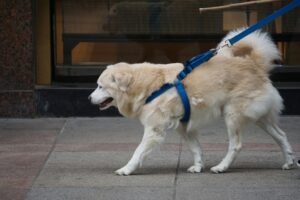
- It is very common for harnesses to trigger resistance responses as they are pulled over the head or tightened around a dog’s body.
Try:
- holding the neck hole open
- allowing your pet to stick their head through willingly
- rewarding the hell out of it for that action alone
Muzzle
- No muzzle should ever mean “bad things are coming.”
- Begin by filling it with treats and allowing your pet to eat from it without securing the harness.
Boots
- Boots feel weird. Most of the pets walk like robots for a little while.
- Begin with one boot only, treat for standing calmly, then take off and repeat.
Life Jacket
Practice wearing it indoors first. Then near shallow water. Then swimming.
5 Easy Gear Hacks That Make Training Harder than it Needs to be
These are the most common mistakes pet owners make (most without even knowing). They are all common.
- Actively avoid putting your gear on only during stressful stimuli (vet visits, storms)
- Rushing the steps
- Keeping gear backstage too long, too soon
- Punishing resistance
- The wrong size is almost worse than none at all.
If putting on the gear is stressful, your pet will become afraid of it.
A Quick Pet Safety Checklist
Before you head out, check:
- Gear fits comfortably
- No rubbing or redness
- Buckles/clips secure
- Pet moves normally
- ID info is current
- You engage in gear-wearing when you don’t “have” to
One small everyday thing that can serve the entire family is to keep emergency and ID information in one place — some pet parents even attach laminated contact cards to carriers or go-bags with lanyards from 4inlanyards because they’re easy to identify quickly should a traveling or emergency arise.
(That isn’t about style — it is about visibility and fast access, which can make a difference when there are seconds to spare.)
Normalize, Not Scare-ify, Safety Gear
When Milo finally succumbed to the harness, of course, it wasn’t an overnight thing. It took small victories — sniffing it without fear, moving it with his nose, letting us touch him while dressed, wearing it long enough to earn a treat, taking the way he normally walks in our living room like nothing changed.
And that’s the point.
Safety gear doesn’t need to be “tolerated” by your pet. They can learn to feel secure in it. Comfortable. Confidence. Even happy.
So take it slow. Celebrate progress. Keep sessions short. And of course: training gear safety is not only about gear — it’s about trust.
And if you put that trust in now, you’re going to be the one who benefits later — out on crowded streets, running into crises, and every moment after that where your pet’s safety is contingent upon their willingness to go around wearing something safe.