Moving day is one of the most dangerous days of the year for household pets. Open doors, sharp box edges, loose packing materials, heavy furniture in motion, and a constant stream of strangers walking in and out – it’s an obstacle course of hazards that most pet owners don’t think about until something goes wrong.
Dogs are especially vulnerable because they respond to chaos by either trying to help (getting underfoot) or trying to escape (bolting through an open door). Unlike a crate-trained puppy who might stay put, an adult dog who has lived in the same home for years can become unpredictable when the environment they trust starts disappearing around them.
This guide breaks down the safety risks room by room and gives you a practical plan for keeping your dog out of harm’s way from first box to final walkthrough.
The Kitchen: Cleaning Products and Forgotten Food
The kitchen is usually one of the first rooms to get packed, and that’s when hidden dangers surface. Cleaning supplies that normally live under the sink get pulled out and left on counters or floors. Half-used bags of food, expired medications stashed in junk drawers, and pest traps tucked behind the fridge all become accessible as you dismantle the room.
Dogs investigate with their mouths. A bottle of floor cleaner left at ground level while you tape a box is all it takes. Before you start packing the kitchen, do a full sweep specifically for anything toxic. Bag it, seal it, and move it to a room your dog can’t access. Pay special attention to sugar-free products containing xylitol, mouse or roach bait stations, and dishwasher pods – all common kitchen items, all potentially fatal to dogs.
The Living Room: Cords, Cushions, and Small Parts
Disassembling furniture means screws, bolts, brackets, and Allen wrenches scattered across the floor. Dogs – especially younger ones – will chew on or swallow small metal objects without hesitation. Keep a magnetic tray or ziplock bag within arm’s reach and sweep hardware into it immediately.
Loose cords from lamps, TVs, and chargers are another risk. When you unplug something, coil the cord and rubber-band it right away. A dangling cord is an invitation for a bored or anxious dog to chew, and an electrical cord that’s still partially live near a power strip is a genuine shock hazard.
If you’re wrapping furniture in moving blankets or plastic wrap, don’t leave sheets of plastic unattended on the floor. Dogs can get tangled in them or, in rare cases, suffocate.
The Bedroom: Medication and Loose Change
Nightstands are where people keep medications, supplements, and small personal items. When you dump a drawer into a box, it’s easy to miss a pill that rolled to the back. Ibuprofen, acetaminophen, and sleep aids are all common nightstand finds and all highly toxic to dogs. Go through each drawer deliberately rather than dumping and sorting later.
Loose change, earring backs, and button batteries also tend to surface during bedroom packing. Button batteries are especially dangerous – if a dog swallows one, it can cause internal chemical burns within hours.
The Bathroom: The Most Overlooked Room
People tend to pack the bathroom last, and by then, fatigue has set in. That’s when mistakes happen. Razors left on the edge of the tub, open bottles of hydrogen peroxide or rubbing alcohol, dental floss that can cause intestinal blockage if swallowed – all standard bathroom items, all risky for a curious dog.
Pack the bathroom early, not last. It takes less time than you think, and getting those hazards sealed into boxes and out of reach removes one of the most concentrated danger zones in the house.
The Front Door: The Biggest Risk of All
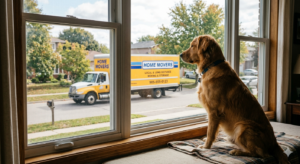
More dogs go missing on moving day than on almost any other day of the year, including the Fourth of July. The front door is propped open. Movers are going back and forth. No one is specifically watching the dog because everyone assumes someone else is.
This is where your plan needs to be airtight. The safest approach is to confine your dog to one designated room that has already been fully packed or is not being used, with a clear sign on the door that says “DOG INSIDE – DO NOT OPEN.” Put their crate, water, a favorite blanket, and a stuffed Kong in there. Check on them every 30 minutes. Do not assume they’re fine just because they’re quiet – some dogs shut down silently under stress.
If a separate room isn’t possible, consider having a trusted friend or family member take your dog to their home for the day. Moving day is not the time to test your dog’s ability to stay calm in chaos.
Hiring Movers: What to Look For When You Have Pets
If you’re hiring professional movers, it’s worth choosing a company that understands the reality of moving with animals in the home. That means crews who know to close doors behind them, who won’t leave the truck ramp down and unattended, and who communicate before entering rooms.
This matters even more in apartment buildings where hallways, stairwells, and elevators create additional escape routes. In a city like Brooklyn, where tight apartment layouts, narrow hallways, and walk-up buildings add layers of complexity, working with a Brooklyn moving company that handles it all – from packing to heavy furniture – means fewer people in and out of your space and less time your door needs to be open. The shorter and more controlled the moving window, the safer it is for your dog.
When you get quotes, ask specifically: “How does your crew handle homes with pets?” The answer will tell you a lot. A company that has a clear answer has dealt with it before. One that hasn’t thought about it probably hasn’t.
The Car Ride: Not an Afterthought
If your move involves driving your dog to the new location, don’t treat transport as the easy part. An unrestrained dog in a car full of boxes is a safety hazard for both the dog and the driver. Use a crash-tested crate or a dog-specific seatbelt harness secured to the vehicle’s latch system. Loose items in the car should be packed tightly so nothing can shift and fall onto your dog during a sudden stop.
Keep water, a leash, waste bags, and any medications in an accessible bag – not buried in the trunk. If the drive is longer than two hours, plan stops every 60 to 90 minutes for water and a short walk. Never leave your dog in a parked car, even for a few minutes, even if the windows are cracked.
The New Home: The First 48 Hours
Arriving at the new place doesn’t mean the danger is over. Your dog doesn’t know this space. They don’t know where the exits are, what sounds are normal, or whether the backyard fence has gaps. Before you let them explore, do a thorough safety check:
- Walk the perimeter of any yard or outdoor space. Look for holes in fencing, gaps under gates, toxic plants, or debris left by previous occupants.
- Check every room for hazards at dog level: mousetraps, exposed wires, open vents, or loose floorboards.
- Make sure all windows have secure screens. A stressed dog on a second floor can push through a weak screen.
Set up one room first with their bed, water, food, and familiar-smelling items. Let that be their home base for the first day or two while they adjust. Gradually introduce them to the rest of the house one room at a time.
A Moving Day Checklist for Dog Owners
Keep this list somewhere visible on moving day:
- Toxic items swept and sealed before packing begins
- Designated safe room chosen, signed, and stocked
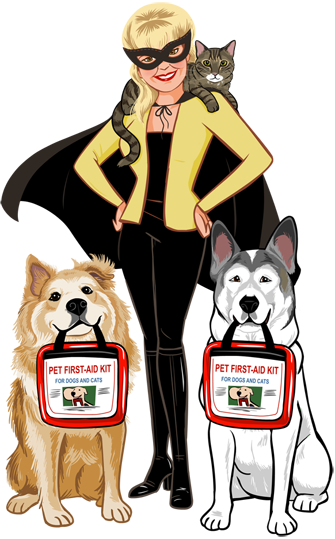
- Dog’s emergency kit packed separately (vet records, medications, food, water, leash, waste bags, comfort item)
- Microchip information updated with your new address and phone number
- ID tags current with your cell number, not your old landline
- Movers briefed on the dog’s location and door protocol
- New home inspected for hazards before the dog enters
- One room set up as a home base at the new address
Moving is temporary. The goal is to get through it without a trip to the emergency vet. A little planning on the front end – packing with your dog’s safety in mind, controlling access points, and choosing movers who understand pets in the home – goes a long way toward making that happen.