The best time to gather emergency supplies for your dog is long before you actually need them. When something goes wrong, whether it is a cut paw on a hike, a sudden illness at home, or an evacuation you did not see coming, the last thing you want is to be digging through drawers for the right item. A little preparation now means you can act calmly and get your dog help faster.
Here are seven categories of emergency supplies worth keeping on hand, along with what to look for and how each one fits into a well-organized home kit.
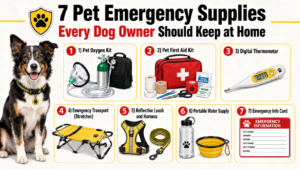
1. Pet Oxygen Kit
A pet oxygen kit can be part of an emergency-preparedness setup for situations where a dog is having trouble breathing and urgent veterinary care is being arranged. It is not a replacement for professional treatment, but the portable format keeps the canister, mask and other components together and ready to transport.
One option designed for home and travel use is the Pawprint Oxygen pet oxygen kit. The kit is organized around your dog’s weight range and includes a 15L oxygen canister of 99% oxygen, a fitted PureVent pet oxygen mask selected by that weight range, oxygen tubing, a regulator, and an EVA travel and storage case that keeps everything together. It also ships with printed instructions, which you should read carefully in advance so you are already familiar with the equipment.
It helps to think of this as one of several pet emergency supplies that support you on the way to professional help, not as a replacement for it. Portable supplemental oxygen should be used in accordance with the official instructions and any guidance from your veterinarian, and your vet or nearest emergency clinic remains where your dog needs to be. If your dog is having trouble breathing, contact them right away.
2. Pet First-Aid Kit
A dedicated pet first-aid kit keeps basic supplies together for managing minor cuts and wounds or providing temporary first aid while veterinary advice is arranged. Rather than raiding the bathroom cabinet mid-emergency, you will have what you need in one labeled place.
Look for gauze, self-adhering vet wrap that clings to itself without sticking to fur, adhesive tape, blunt-tipped scissors, tweezers, and a pair of clean disposable gloves. Styptic powder is useful for minor nail bleeds. Many owners also tuck in a small blanket and a copy of important documents. Check the kit a few times a year and replace anything that has run low or expired.
3. Digital Pet Thermometer
A digital pet thermometer can provide useful information to share with your veterinarian when it is used correctly. Knowing whether your dog is running warm or cool can help your vet understand what may be going on over the phone before you arrive.
The key phrase there is used correctly. Ask your veterinarian to show you how to use a thermometer safely on your dog, and when a reading is worth taking, well before you are ever in a stressful situation. Your veterinarian can explain the safest method and what temperature range is considered normal for your dog.
4. Emergency Transport Sling
If your dog is injured and cannot walk, moving them without help can be difficult and risky for both of you. An emergency transport sling can make it easier to move a larger dog, although an injured dog should be handled as little as possible until veterinary guidance is available.
Keep in mind that an injured dog may bite or feel more pain when handled, even a gentle, well-trained one. Where possible, call your veterinarian for guidance on how to move your dog safely before you attempt it, and take care to protect yourself as well as your pet.
5. Reflective Leash or Harness
Emergencies do not wait for daylight. A reflective leash or harness helps keep your dog visible and under control during nighttime walks, roadside situations, or an unexpected evacuation. Look for sturdy hardware, comfortable padding, and reflective strips that show up clearly in headlights.
A secure, well-fitted harness can provide another point of control during a stressful situation, particularly if a frightened dog is likely to pull or try to escape. Keep a spare leash in your car or emergency bag so you are never caught without one.
6. Portable Water Supply
Whether you are traveling, waiting out a heat wave, or evacuating, having clean water on hand keeps your dog comfortable and hydrated. A collapsible bowl and a bottle or two of water take up little space and are easy to rotate into your kit.
Offer water to a calm, alert dog who wants it, but never force water into a dog who is sick, unconscious, or in distress. If your dog will not drink or seems unwell, that is a sign to contact your veterinarian rather than to push fluids.
7. Emergency Contact and Medical-Information Card
When time is tight, you do not want to be hunting for phone numbers. Keep a simple card in your kit and a photo of it on your phone. Include your regular veterinarian, the nearest emergency veterinary clinic, your dog’s medications and any allergies, any important medical conditions, and the number for an official animal poison-control service.
One widely used option is the Pet Poison Helpline, reachable 24/7 at (855) 764-7661. A per-incident consultation fee may apply. In any poisoning situation, contact your veterinarian or an official poison-control service right away.
Putting Your Kit Together
Store everything in one waterproof container that is easy to grab, and keep a smaller version in your car. Label the outside clearly, note any expiration dates, and set a reminder to check the contents a couple of times a year. Everyone in the household should know where the kit lives.
Supplies are only part of the picture. Emergency items help you respond, but they do not replace professional care. If your dog is seriously ill, injured, or having trouble breathing, contact your veterinarian or an emergency clinic immediately.
Final Thoughts
Preparing these supplies in advance can make an emergency less chaotic and help you reach professional care more efficiently. Pawprint Oxygen adds a portable supplemental-oxygen option to the wider kit, while first-aid supplies, transport equipment, water and up-to-date medical information cover other practical needs. Keep everything together, review it regularly and contact a veterinarian or emergency clinic whenever your dog is seriously ill, injured or having trouble breathing. To really be your pet’s hero, learn Pet First Aid & CPR, and regularly brush-up on your skills by reviewing your pet first aid handbook