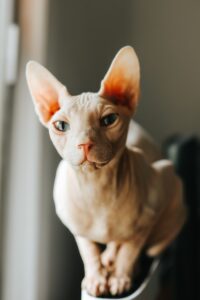
According to the Cat Fanciers’ Association’s Most Popular Breeds Report, 2023, the Sphynx ranks 10th among all registered pedigree breeds in the U.S., described officially by the CFA as possessing “extroverted behavior, high energy levels, and affection towards their families” that make them “a unique choice for those seeking an unconventional cat.”
That ranking reflects something real. The Sphynx Cat’s hairless appearance attracts attention, but it is the personality that earns loyalty. Owners who bring home a Sphynx kitten expecting an unusual-looking cat frequently discover something they did not anticipate: a companion that engages with them more actively, more consistently, and more expressively than any cat they have previously owned.
Are Sphynx cats good pets? Yes, for the right owner. The Sphynx is not a low-maintenance, low-interaction breed. It is a high-engagement companion that delivers an exceptional ownership experience for owners who can meet what it genuinely requires.
A Sphynx Kitten is one of the most immediately social young cats available. Where many kittens need weeks to fully settle and open up, a Sphynx Kitten typically initiates contact within the first days of arrival, approaches strangers confidently, and treats every available lap as an open invitation. That confidence is not a phase that settles down with age. It is a permanent breed characteristic.
5 Reasons to Choose a Sphynx As Your Pet
Reason 1: Sphynx Cats Are Among the Most Affectionate Breeds Available
The Sphynx Cat is defined by the CFA as possessing a “people-oriented personality” – a characterization that understates what owners actually experience. Shauntay Burris, Breed Committee Chair at TICA and Sphynx breeder at Scantily Clad Sphynx, describes them as “very co-dependent,” a term that captures the intensity of the breed’s attachment accurately. Sphynx Cats follow their owners between rooms, sleep under covers for warmth and proximity, and seek physical contact with a consistency that most breeds simply do not maintain.
For owners who want a cat that is genuinely present in their daily life rather than occupying the same space at a distance, the Sphynx delivers that more reliably than virtually any other breed.
Reason 2: Are Sphynx Cats Friendly? Consistently and Immediately
Are Sphynx Cats friendly? More so than most breeds, and more broadly so. Where many affectionate breeds bond closely with their primary person while remaining reserved with strangers, the Sphynx Cat extends its social confidence outward. It approaches visitors, integrates into social gatherings, and adapts to new people with an ease that surprises owners who expected a more selective attachment.
This openness makes the Sphynx Cat particularly well-suited to busy, social households: families with children, homes that receive regular visitors, and multi-pet environments where adaptability matters.
Reason 3: Sphynx Cats Are Exceptionally Intelligent and Trainable
The Sphynx Cat’s intelligence is practical and purposeful. Cyndee Hill, Sphynx Breed Council Secretary for the CFA, has documented Sphynx Cats learning to use the toilet independently – one of the more striking anecdotal illustrations of what this breed applies its cognitive capacity to. More practically, Sphynx Cats learn household routines quickly, respond reliably to their names, and can be trained through positive reinforcement to a standard most cat owners associate with dogs rather than cats.
Their intelligence is also the reason under-stimulation is a genuine risk. A Sphynx Cat that lacks engagement will find its own outlets, not always ones the owner prefers.
Reason 4: The Hairless Coat Eliminates Shedding Entirely
The Sphynx Cat’s hairless coat removes the most universally disliked aspect of cat ownership for many people: fur on furniture, clothing, and bedding. Sphynx Cats produce no shed hair. This makes them a practical consideration for owners who want a cat but find shedding management prohibitive, or for households where loose fur creates persistent hygiene concerns.
The trade-off is skin care rather than coat care: weekly bathing to remove oil buildup that a coat would otherwise absorb, regular ear cleaning, and nail maintenance. The total grooming time is comparable to a shorthaired breed – different in nature, but not in volume.
Reason 5: Sphynx Cats Are Warm, Physical Companions in a Literal Sense
Because they lack an insulating coat, Sphynx Cats run warmer to the touch than furred cats and actively seek warmth from their owners. This drives the physical closeness the breed is known for: sleeping against or under their owners, seeking body contact throughout the day, and sharing body heat in a way that owners consistently describe as uniquely comforting.
This is not simply affectionate behavior. It is a physiological reality of the breed that reinforces the bond in a practical, daily way that furred breeds do not replicate.
What Sphynx Cat Ownership Actually Requires
The five reasons above are genuine. So are the responsibilities that accompany them.
- Skin care: Weekly bathing with a gentle cat-appropriate shampoo to prevent oil and dirt accumulation on bare skin
- Temperature management: Sphynx Cats lose body heat faster than coated breeds and need warm environments, blankets, and owner proximity – outdoor exposure in cold weather is not appropriate
- HCM screening: Hypertrophic cardiomyopathy is the breed’s primary documented health risk; sourcing from a breeder who screens breeding cats by echocardiogram is non-negotiable
- Daily interaction: The breed’s social dependency is genuine – owners away from home for long hours without a companion animal or enrichment program will find the Sphynx Cat’s needs difficult to meet
The Sphynx Cat Rewards What It Asks For
The Sphynx Cat is one of the most rewarding breeds available precisely because it gives back in proportion to what the owner puts in, and what it puts in, by default, is everything. For owners ready to match that investment, the relationship is unlike what most cats offer.
No other pedigree breed combines the Sphynx’s social openness, physical warmth, and consistent engagement in quite the same profile. The hairless appearance is the first thing people notice. The personality is what makes Sphynx Cat owners so consistently devoted, and so consistently evangelical about recommending the breed to others.
Frequently Asked Questions
Are Sphynx Cats good pets for first-time owners?
Yes, with one qualification: first-time owners should understand the breed’s social dependency before committing. Sphynx Cats require daily interaction, skin care maintenance, and an indoor environment managed for warmth. Owners who can meet those requirements consistently find the Sphynx one of the most rewarding first cat experiences available. Owners who want a low-interaction, low-maintenance breed should choose differently.
Are Sphynx Cats friendly with children and other pets?
Yes, the Sphynx Cat’s broad social confidence makes it one of the more child- and multi-pet-compatible breeds available. It approaches rather than retreats from new people and animals, adapts to active households without significant stress, and integrates with other social breeds like Devon Rex Cats, Abyssinians, and similarly active companions particularly well.
How much does a Sphynx Kitten cost from a reputable breeder?
Sphynx Kittens from health-tested, HCM-screened breeders in the U.S. typically range from $1,700 to $3,500, reflecting the breed’s relatively small breeding population, health testing requirements, and consistent demand. Kittens priced significantly below this range should be scrutinized carefully – HCM screening in particular generates a real cost that responsible breeders cannot eliminate.
Do Sphynx Cats require a lot of grooming despite having no fur?
Their grooming routine is different from furred cats rather than simpler. Weekly bathing removes the skin oil buildup that a coat would normally absorb, ears require regular cleaning due to wax accumulation, and nails need trimming every two weeks. Total weekly grooming time is comparable to maintaining a shorthaired breed – the commitment is real but not excessive for an engaged owner.
Are Sphynx Cats hypoallergenic?
No cat is fully hypoallergenic, and the Sphynx is no exception. Cat allergies are typically triggered by the Fel d 1 protein found in saliva, skin secretions, and urine. Some allergy-affected individuals report fewer reactions around Sphynx Cats; others find their symptoms unchanged or worsened. Anyone with known cat allergies should spend extended time with an adult Sphynx Cat before purchasing a kitten.