Pets are living longer than they used to. That’s not a chance. It’s the result of owners paying more attention to preventive care, feeding better food, and building enrichment into everyday life, small choices that add up to real years.
Celebrate that. But more years only matter if they’re good years. Talk to anyone whose dog or cat made it well into its teens, and a pattern shows up: four habits, built early, never dropped.
Four Pillars Of A Long, Happy Life
None of the four is complicated by itself. Consistency is what makes the difference, not perfection.
Nutrition
Nutritional needs shift with age, and most owners don’t notice until the shift has already happened. Food that suited a young, active pet can quietly work against an older one.
Senior pets typically need protein that’s easier to digest, to help protect the muscle they already have. Cats especially. Their whole biology runs on high quality animal protein, from kitten-hood on.
Weight matters just as much as the ingredients list. Pets that hold onto lean muscle through midlife, rather than losing it to fat, tend to move more easily and stay more comfortable once they’re older. A lean, well-fed pet is not the same thing as a thin one. Match the diet to age and activity level, and don’t set it once and forget it. Review it at every vet visit, and ask what’s actually right for your pet, because breed, size, and health history all change the answer. No supplement replaces that kind of attention.
Movement
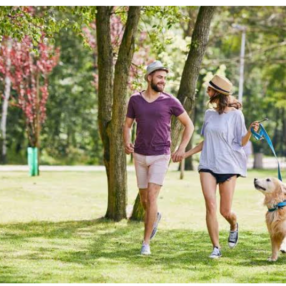
Exercise needs to change too. A young dog can handle a hard run around the block. An older dog with stiff joints usually does better on two short, gentle walks than one long one. Grass and dirt beat pavement.
For cats, movement usually means encouraging play rather than scheduling it. A wand toy worked into the day, a few minutes here and there, keeps an older cat’s joints and muscles moving without demanding anything it doesn’t feel like giving. The goal is not intensity, it’s frequency. A dog that moves a little every single day tends to fare better, long term, than one that goes hard once in a while and does nothing in between.
Mental Enrichment
Most owners underrate mental stimulation, especially once a pet’s body starts slowing down. Puzzle feeders turn an ordinary meal into a proper mental workout. Swap the toys out regularly. Leave the same three lying around forever and curiosity fades. Rotate them and it doesn’t. Even hiding a few treats around a room works. It doesn’t need to cost anything, either. A cardboard box with treats tucked inside does the same job as anything bought from a pet shop. Small effort. Real payoff.
Routine Veterinary Care
Regular veterinary care is what ties the other three pillars together. It’s also the easiest one to skip, because nothing forces the issue. No visible problem means no urgency, until there is one.
How Regular Vet Care Supports Pet Well-being
Many vets lean on a simple framework called HHHHHMM to talk through how a pet is actually doing, day to day, not just whether they’re sick or healthy. Seven factors: Hurt, Hunger, Hydration, Hygiene, Happiness, Mobility, and More good days than bad. Between them, they give owners and vets a shared vocabulary for something that’s usually hard to describe.
This kind of structured conversation does more than catch illness early. It lets owners track small changes, appetite, energy, comfort, that are nearly invisible day to day but obvious once you zoom out. A pet can look fine every single morning and still be sliding. You only see it looking back.
Supporting Quality of Life as Your Pet Gets Older
That same conversation is worth having with a professional once a pet reaches its senior years, and not only when things go wrong. Sometimes you just want clarity. A quality of life assessment for pets covers much of the same ground, comfort, mobility, appetite, happiness, with a vet walking through it alongside you.
Sometimes that means practical changes to keep them comfortable. Sometimes it means clear, compassionate guidance on what to do next, whatever that turns out to be. Either way, getting that guidance early tends to leave owners more confident in whatever comes next, instead of working it all out alone, mid-crisis.
Small Habits That Can Add Up to More Happy Years
This isn’t a system that requires an overhaul. A senior-appropriate diet. A walk suited to your dog’s joints, or a few minutes of wand-toy chaos for your cat. A rotated puzzle feeder. A checkup schedule you actually keep. That’s the whole list. It’s not glamorous. That’s the point. Add in a quality of life conversation once they’re older, and the whole thing is built to catch problems early instead of after.
The pets who live well into old age are rarely the ones with the fanciest food or the most expensive gadgets. They are the ones whose owners paid attention, consistently, year after year. That’s the real secret. And it’s one every pet owner can start on today.