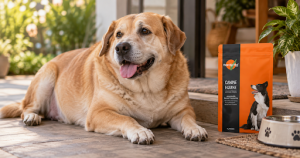
Most dog owners notice the limp before they notice the cause. A slower walk to the letterbox, some hesitation before jumping into the car, a reluctance to take the stairs the way they used to. It is tempting to chalk it up to age, but for a huge number of Australian dogs, the real story starts at the food bowl. Extra weight is one of the most common, and most fixable, drivers of joint pain in dogs, and it is often the piece owners overlook while searching for a natural joint supplement for dogs or a fix for a stiff-looking pet.
Vets have been saying it for years: a few extra kilos on a dog’s frame is not the same as a few extra kilos on a human one. On a 10 kilogram dog, an extra 1.5 kilos is the proportional equivalent of a grown adult carrying an additional 15 or so kilos around all day, every day, on joints that were never built for it. That load lands squarely on the hips, knees and spine, and over months and years it accelerates wear on cartilage that is already under pressure from ageing, breed predisposition or an old injury.
The mechanical toll of extra weight
Joints work like hinges cushioned by cartilage and lubricated by synovial fluid. Add sustained excess weight, and every step, jump and stair climb grinds that cushioning down faster than it can repair itself. This is how osteoarthritis takes hold, and it explains why overweight dogs are diagnosed with the condition earlier and more severely than dogs at a healthy weight. Fat tissue is not just passive baggage, either. It behaves almost like an organ in its own right, releasing inflammatory compounds that circulate through the body and irritate joints that are already vulnerable. So it is not only about the physical load. A heavier dog is dealing with a low-grade inflammatory state on top of the extra strain, which is part of why joint issues in overweight dogs tend to progress faster and hurt more.
Recognising when a dog is carrying too much
Bathroom scales rarely tell the full story, because a healthy weight varies enormously between a whippet and a Staffy. What matters more is body condition, something owners can check hands-on. Running fingers along the ribs should reveal them with a light covering of fat, not have to dig through padding to find them. Looking down from above, there should be a visible waist behind the ribs, and looking from the side, the belly should tuck upward rather than sag or hang level with the chest. If none of that feels familiar, it is worth raising with a vet at the next visit, since they can score body condition properly and rule out anything else going on, such as thyroid issues, that can quietly contribute to weight gain.
Losing weight the safe way
Crash dieting a dog is not the answer, and neither is guessing at portions. Sustainable weight loss in dogs usually comes down to a measured calorie deficit, ideally worked out with a vet who can factor in age, breed and any existing joint disease. That might mean switching to a lower-calorie or weight-management formula, more accurately measuring meals instead of eyeballing them, and cutting back on the extra treats and table scraps that add up faster than most owners realise. Exercise plays its part too, but for a dog already sore in the hips or knees, that has to be introduced carefully. Short, frequent walks on flat ground, or swimming where it is available, tend to build fitness without hammering already inflamed joints. A vet or vet physiotherapist can help pace this so the dog is moving enough to shed weight without setting back their comfort.
Where joint support fits into the picture
Weight loss addresses the load on the joints. It does not undo damage that has already occurred, and that is where joint-support products tend to come into the conversation, not as a replacement for the diet and exercise plan but as something running alongside it. Rose-Hip Vital is one example on the Australian market, made from Rosa canina rosehips and standardised for GOPO, a compound that has been studied in a number of clinical trials, including several double-blind, placebo-controlled ones, for its effect on inflammatory activity in and around joints. Owners typically report changes within a few weeks of starting, though as with any supplement, individual response varies and it is not a substitute for veterinary diagnosis or treatment. Rose-Hip Vital markets its canine formula as suitable for long-term use and safe to run alongside other medications, though checking with a vet first is still the sensible move, particularly for dogs already on treatment for arthritis or another condition.
Bringing it together
Joint health in dogs is rarely about one single factor, and weight is the one owners have the most genuine control over. Trimming excess kilos through a properly paced, vet-guided plan reduces the mechanical strain on hips and knees and calms some of the background inflammation that comes with carrying too much fat. Layer a joint supplement on top of that, and many owners find the two efforts complement each other rather than compete. The dog that used to hesitate at the back step often starts taking it in stride again, not because of any single fix, but because the whole picture, weight, movement and joint support, was finally addressed together.