“My dog once sliced his paw pad open on a broken bottle at the beach. Blood everywhere. I had gauze, which was lucky, but no saline, no vet wrap, and no idea where the nearest emergency clinic was. That was eight years ago. My kit looks very different now.”
That is a common tale.
Most pet owners assemble a first-aid kit, shove it in a cupboard, and forget about it. Then the emergency arrives and half the supplies have expired. Worse, the prescription medications you assumed were tucked inside ran out months ago and nobody refilled them.
If you own pets in the UK, there’s another wrinkle worth paying attention to. The Royal College of Veterinary Surgeons (RCVS) rolled out significant changes to its practice standards and prescribing guidance, and those changes affect how quickly you can get hold of certain medicines. American readers with British relatives, or anyone relocating across the Atlantic with a pet, should know what’s shifted.
What Actually Belongs in a Pet First-Aid Kit
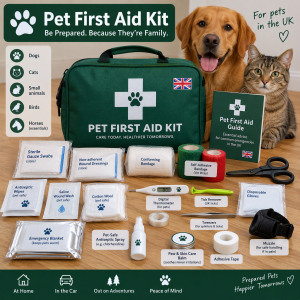
Start with the basics and resist the urge to over stuff. A kit you can’t carry is a kit you’ll leave at home.
- Sterile gauze pads in two sizes, plus a roll of cohesive bandage that sticks to itself rather than fur
- Saline solution in single-use vials for flushing eyes and wounds
- Blunt-tipped scissors and tweezers for ticks, splinters, and trimming hair around a cut
- A digital rectal thermometer and petroleum jelly. Normal canine temperature sits between 100.4 and 102.5°F; anything above 104 means you’re calling a vet now
- Styptic powder for torn nails, which bleed far more dramatically than the injury warrants
- A muzzle that fits. Pain makes gentle animals bite, and that includes yours
- A thick towel or blanket doubling as a stretcher and a restraint
- Emergency contact card with your regular vet, the nearest 24-hour hospital, and a poison control line
The Prescription Layer Most People Skip
Here’s where kits fall apart. Over-the-counter supplies are easy. Prescription items require planning, because you cannot buy them on a Saturday afternoon when your cat starts wheezing.
Ask your vet which of your pet’s regular medications should live in the kit as a labeled spare. For a dog with seizure history, that might be rectal diazepam. For an asthmatic cat, a spare inhaler and spacer. Pets on long-term pain management often benefit from a small reserve of their NSAID, clearly dated and rotated.
Never add human painkillers. Acetaminophen kills cats. Ibuprofen causes gastric ulceration and kidney failure in dogs at doses lower than most owners expect. One 200mg tablet can poison a ten-pound terrier.
How the UK Rules Changed
The RCVS tightened guidance on remote prescribing after the pandemic-era relaxations expired. Under the current framework, veterinary surgeons must have performed a physical examination of the animal before prescribing prescription-only veterinary medicines in most circumstances. The temporary allowance for prescribing based purely on a video call has largely gone.
In practical terms: the days of ringing a vet you’ve never visited and getting a prescription emailed over are done. You need an established relationship and a recent in-person consultation, typically within the last six months for ongoing conditions, though your vet sets the review interval based on the medicine and the animal.
What This Means for Online Pharmacies
Online veterinary pharmacies remain entirely legal and often considerably cheaper than buying direct from a clinic. The model simply requires a written prescription from your own vet. Services like Pet Drugs Online dispense against that prescription, which means the paperwork sits with you rather than with the pharmacy.
Build the lead time into your planning. Request the written prescription at your pet’s routine appointment rather than waiting until the bottle is nearly empty. Clinics may charge a prescription fee, commonly between £15 and £25, and some take several working days to produce it. Add postage on top and you’re looking at a week minimum from decision to delivery.
Keeping the Kit Honest
Set a calendar reminder twice a year. I use the clock changes, because I’m already wandering round the house adjusting things.
Check every expiration date. Saline and gauze degrade quietly. Replace anything within three months of expiring rather than cutting it fine. Confirm your emergency numbers still work; clinics merge and relocate more often than you’d think.
Weigh your pet and write the current figure on the inside of the lid. Dosing decisions in an emergency depend on accurate weight, and a panicked owner guessing is a recipe for error.
Finally, learn to use what you’ve bought. A tourniquet applied badly does more harm than no tourniquet. Red Cross and local veterinary practices run pet first-aid courses, usually a single afternoon, and the muscle memory matters more than the contents of your bag.
Emergencies are chaotic. Preparation is the only part you control.