Image generated by Gemini
A new caregiver walking through your front door might feel like a simple scheduling swap to you. But to your dog, it can register as a total stranger crossing into sacred territory. Even the friendliest, most social dogs can turn tense, barky, or defensive when their daily routine and personal space shift without warning.
Rushing that first meeting almost always leads to unnecessary stress and dangerous miscommunications that can permanently shake a dog’s trust. By focusing on smart management and learning to read your pet’s subtle physical cues (not just the obvious growl), you can head off fear-based reactions and build a genuinely safe relationship between your dog and their new caregiver. Sounds like a lot of work? It’s less than you’d think, and the payoff is enormous.
Why a New Pet Sitter Can Feel Threatening to Your Dog
Dogs notice change faster than people do
Dogs process the world through unfamiliar scents, sudden movements, and shifts in tone of voice, which means any routine disruption can become an anxiety trigger. Home entry is often the highest-tension point because a dog’s natural instinct is to guard its territory against unfamiliar intruders. Think about it from their perspective: they don’t know this person has good intentions.
On top of that, canine stress stacks quickly. The combination of owner travel prep, packed suitcases, and altered feeding times puts your dog on high alert before the sitter even rings the doorbell. Picture a dog who already senses something is “off” about today, then suddenly a stranger appears at the door. That’s a recipe for a reaction.
Fear, not “bad behavior,” is often the real issue
When your dog starts growling, barking, freezing, or retreating, they’re communicating fear, not acting out of malice or disobedience. Punishing these warning signs only worsens their anxiety and teaches them to suppress those signals, which can lead to sudden bites with zero warning.
Failing to address these warning behaviors can be incredibly costly, both financially and emotionally; corporate insurance registries indicate that canine-related liability payouts across the United States topped $1.12 billion in 2023 alone.
A recent news report from Warren, Michigan described allegations that a pet sitter abused a stressed 6-year-old pit bull named Frankie. This disturbing case highlights exactly why owners need to prioritize safe introductions, closely observe interactions, and choose sitters who respect canine boundaries rather than forcing compliance. You can’t just hand over the keys and hope for the best.
How to Safely Introduce Your Dog to a New Pet Sitter
A calm, step-by-step approach
- Start with a meet-and-greet well before you leave: Don’t make the first introduction the same day you head out on a trip, because this heavily compounds travel anxiety. Choose a low-pressure time for the meeting, avoiding periods of household chaos, such as dinner time or the morning rush. Scheduling this initial interaction while you’re calm and present lets your dog read your relaxed body language, which can genuinely lower their defensive instincts.
- Begin on neutral ground: Stage the first meeting outside the home; the yard, a nearby sidewalk, or a quiet park area all work. Walk side by side with the sitter rather than forcing a direct, face-to-face greeting that can feel confrontational to a dog. Make sure you explain to the sitter that they need to avoid looming over the animal, making direct eye contact, or reaching over the dog’s head, as these are commonly recognized threat signals in canine communication.
- Let your dog choose the pace: Never force petting, hugging, or close physical contact if your dog hesitates or backs away. Instead, ask the sitter to gently toss high-value treats (something irresistible like freeze-dried liver or small bits of cheese) on the ground while speaking in a soft, reassuring voice. This lets the dog approach on their own terms, rewarding their natural curiosity and calm behavior without the pressure of forced socialization.
- Practice a controlled entry into the home: After a successful outdoor meeting, walk up to the house and enter together in a calm, orderly manner. Keep your dog on a leash if needed to maintain control, but make sure the leash stays loose so you don’t transmit physical tension to the dog’s collar. Avoid crowding the doorway, as tight spaces often trigger excitement spikes and territorial reactions that can derail an otherwise peaceful introduction.
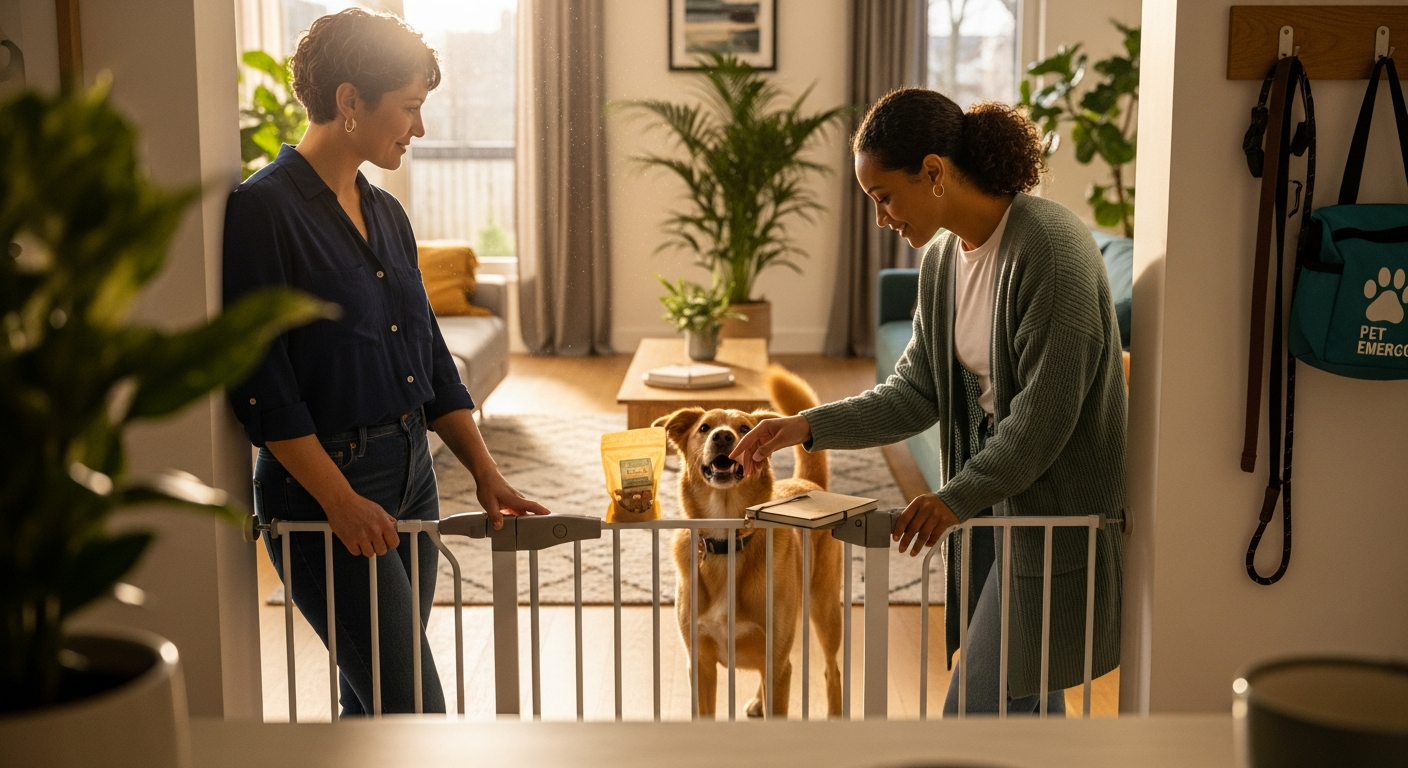
- Use baby gates, pens, or a safe room: Installing physical barriers reduces social pressure and protects everyone from sudden behavioral shifts. Let the dog observe the sitter from a secure distance, giving them time to process the new smells and sounds without feeling trapped or overwhelmed. Baby gates are especially useful for pets that show stranger sensitivity or resource-guarding tendencies; you’d be surprised how much calmer a dog gets when they feel they have an exit strategy.
- Run a short trial visit: Leave the room briefly while the sitter remains, then step out of the house entirely for just a few minutes to gauge the dog’s reaction. Gradually build up from these brief absences to longer periods away, showing the dog that you’ll return. Watch closely to see how your dog settles in the sitter’s presence rather than just focusing on the initial greeting, since real comfort takes time to establish.
- Repeat before the first solo sit: Two or three short, well-managed sessions consistently produce better results than one long, stressful visit. Repetition builds predictability and trust, showing the dog that this new person brings positive experiences and quiet companionship. If you’re working with a highly fearful rescue dog, consider reaching out to a certified positive-reinforcement trainer or veterinary behavior professional to help structure these visits safely.
Dog Body Language You Should Never Ignore
Early stress signs
Recognizing canine discomfort early helps prevent situations from escalating into dangerous bite incidents. Not sure what to watch for? Look for subtle indicators like lip licking when no food is present, yawning out of context, or your dog turning their head away to avoid interaction. Other warning signs include sudden frantic sniffing, a tightly tucked tail, nervous pacing, panting when the room isn’t hot, and ears pinned flat against the skull.
Signs the interaction needs to stop immediately
If your dog locks into a hard, unblinking stare or completely freezes in place, pause the introduction immediately and create distance. Growling, lunging, snapping, raised hackles paired with a stiff body posture, or repeated attempts to escape the room are all clear signals that the dog is overwhelmed. If your dog shows intense fear, repeated snapping, or escalating aggression, consult your veterinarian or a qualified force-free behavior professional right away to help prevent a bite. Don’t wait and see if it “gets better on its own,” because it rarely does.
Set Up the Home So the Sitter Never Has to “Push Through”
Build safety into the environment
You can help prevent bites during pet-sitter visits by structuring your home to eliminate potential conflict zones. Place baby gates at main entry points, secure high-value items like food bowls or favorite chews, and only use a crate if your dog already views it as a comfortable, safe space. Learning how to help your dog adjust to a new routine also involves providing written care sheets and keeping a backup leash near the front door. One important note: never introduce a muzzle during a crisis. Only use one if it’s been positively conditioned in advance, ideally over several weeks of treat-paired practice.
Use this comparison table
| Setup Tool | Best For | Main Safety Benefit | Watch-Out |
| Baby gate | First indoor meetings | Creates distance without isolation | Must be secure and tall enough |
| Leash and harness | Controlled movement | Prevents rushing the doorway | Avoid tight leash tension |
| Crate or safe room | Dogs who need decompression | Gives the dog a retreat zone | Only if already a positive space |
| Treat tosses | Building positive association | Reduces social pressure | Don’t lure the dog too close too fast |
| Written care notes | Sitter consistency | Prevents mixed signals | Keep instructions simple and visible |
Emergency Preparedness Matters More Than Most Owners Realize
Prepare for mistakes before they happen
Even with the best introduction plan, you should establish an emergency plan for pet sitter visits in case things go sideways. Leave your veterinarian’s contact information and the address of the nearest 24-hour emergency clinic clearly visible on the kitchen counter. You should also share explicit bite-prevention handling rules, identify a secure confinement room if stress levels peak, and designate a backup contact person if the dog completely refuses care. Ask any experienced pet sitter, and they’ll tell you: having that plan written down ahead of time makes all the difference when adrenaline is running high.
Why prevention also protects you legally
A failed introduction carries heavy emotional weight and can also trigger serious medical and legal consequences for everyone involved. The financial burden of these accidents is massive; the average cost per dog-related injury claim reached $69,272 in 2024. These incidents get even more complicated on rental properties, in apartment hallways, or within shared yards, where landlord liability issues may come into play.
Here’s something a lot of dog owners don’t realize: a dog sitter can sometimes be held jointly liable with you for injuries that happen under their watch. In some strict liability states, you may remain responsible even if your pet has zero prior history of aggression. If you’re worried about what happens when someone gets bit by a dog while dog-sitting, especially in a rental or shared-property setting, understanding how liability works in those scenarios can help explain why prevention and clear supervision matter so much.
A Slow Introduction Builds Real Trust
Progress matters far more than speed when you’re helping your dog accept a new caregiver into their private sanctuary. So what does a successful introduction actually look like? It might be quiet and distant rather than cuddly, and reaching for management tools like barriers shows thoughtful planning rather than failure as an owner. With a calm plan, clear boundaries, and a bit of extra patience, you can help your dog feel safe with a new sitter instead of overwhelmed. That’s worth every minute of preparation.