For decades, residential security followed a predictable formula. As families accumulated wealth, they invested in larger estates, higher perimeter walls, surveillance cameras, alarm systems, controlled access, and private security personnel. The assumption was simple: if the property was secure, the family would be secure as well.
Insights from Laszlo and Martina Pek Mrazovac of Elite Protection Dogs
Today’s reality looks very different.
High-net-worth families rarely spend all of their time behind the gates of a single residence. They move constantly between homes, schools, offices, private airports, vacation properties, restaurants, charity events, and international destinations. Modern life has become increasingly mobile, and security has had to evolve alongside it.
After working with families across the United States for decades, Laszlo and Martina Pek Mrazovac have watched this change happen firsthand. The conversations they have today are very different from the ones they had fifteen or twenty years ago.
Families no longer ask whether they should invest in security.
They ask what kind of security continues protecting them after they leave home.
That question has become one of the main reasons professionally trained protection dogs are becoming an increasingly important part of modern residential security.
Unlike cameras, alarms, or access control systems, a protection dog doesn’t remain attached to a building. It accompanies the family, adapts to changing environments, continuously observes the people around it, and provides something technology cannot replicate: independent judgment.
Why Wealthy Families Are Rethinking Residential Security
One of the biggest misconceptions about private security is that more technology automatically creates more protection.
Technology is essential. Elite Protection Dogs works with many families whose homes already include advanced surveillance systems, controlled entry points, estate management staff, and professional security teams.
None of those systems are unnecessary. But they all share one limitation.They protect locations. They do not protect people once those people leave those locations.
According to Laszlo Pek Mrazovac, this has become one of the most noticeable changes among executive clients and high-net-worth families over the past decade.
A typical day may begin at a private residence, continue through business meetings, school drop-offs, medical appointments, restaurants, private aviation terminals, and another residence several hours away.
- Every transition creates new variables.
- Every unfamiliar environment introduces new people.
- Every movement creates opportunities that simply do not exist inside a secured estate.
Over the years, Laszlo and Martina have found that these transitional moments—not the hours spent inside protected home – are often where families feel most vulnerable.
That observation has changed the way many clients think about personal security.Instead of asking how to better protect their property, they begin asking how to better protect their everyday lives.That distinction changes everything.
One Conversation We Hear More Often Than Ever Before
One conversation has become remarkably consistent over the past decade.Families rarely contact us because they believe their home lacks security. Most already have sophisticated alarm systems, surveillance cameras, gated entrances, estate managers, or private security personnel.
Instead, they describe something much more difficult to solve. They tell us they feel protected while they’re at home—but not necessarily while they’re living their lives.
- The drive to school.
- Walking through a parking garage after dinner.
- Checking into a hotel during family travel.
- Moving between multiple residences.
- Meeting clients in unfamiliar cities.
These are the moments that traditional residential security was never designed to cover.
According to Laszlo Pek Mrazovac, this shift has fundamentally changed how affluent families think about protection.
“Ten years ago, conversations focused on protecting estates. Today, they focus on protecting lifestyles.”
That change explains why professionally developed protection dogs have become part of a broader security strategy rather than simply another layer of home protection.
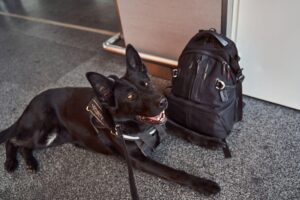
What Three Generations Have Learned About Real Protection
Since 1962, the Pek Mrazovac family has bred, evaluated, and developed working dogs across Europe and, later, the United States. Working with thousands of dogs over three generations has taught them that genuine protection has surprisingly little to do with aggression.
That single principle influences everything from breeding selections to puppy evaluations and advanced development programs. It also explains why relatively few dogs ever become suitable for executive or family protection work.Protection begins with selection. Training simply allows the right dog to reach its potential.
Why Protection Dogs Succeed Where Traditional Security Systems End
One of the biggest changes Laszlo and Martina have observed is that affluent families no longer view security as something fixed to a property. They view it as something that must move with them.
An alarm system protects the residence. A surveillance camera records what has already happened. An access control system secures a gate.A professionally developed protection dog protects the people who have already walked beyond all three.That difference explains why more families are beginning to see protection dogs as a complement to traditional security rather than a replacement for it.
According to Laszlo, the objective has never been to convince clients that technology is unnecessary. The best security strategies combine multiple layers, each designed for a different purpose. Cameras provide documentation. Access control limits entry. Security personnel offer professional oversight. A protection dog contributes something entirely different: continuous situational awareness wherever the family happens to be.Unlike electronic systems, a dog constantly evaluates its surroundings. It notices changes in movement, posture, proximity, confidence, and behavior while remaining completely integrated into everyday family life.What often surprises new clients is how little of this evaluation is visible. A professionally trained protection dog does not spend its day looking threatening. It spends its day observing.That observation is exactly what allows the dog to remain relaxed around children, guests, household staff, and ordinary daily activities while still recognizing situations that deserve additional attention.
Over the years, Laszlo and Martina have found that many families initially believe protection work defines the quality of the dog. Several months after placement, they usually describe something entirely different.
What Changes After Families Begin Living With a Protection Dog
One pattern has repeated itself often enough that we now expect it.When families first begin looking for a protection dog, most conversations focus on security. They want to understand protection training, breeds, deterrence, and how the dog would respond if a genuine threat occurred.Several months after placement, those conversations become surprisingly different.Clients rarely tell us the most valuable part was the protection work.Instead, they describe the confidence they feel walking through unfamiliar places, travelling with their children, or simply knowing a calm, dependable dog is beside them wherever life takes them.Protection becomes less about preparing for worst-case scenarios and more about removing uncertainty from everyday life.That transition is something no brochure can fully explain.
It is something families experience only after living with the right dog.
- They talk about confidence.
- Peace of mind.
- Consistency.
- The quiet comfort of knowing the dog is always present without constantly demanding attention.
Those are qualities no alarm system can provide.
What Families Value Most After Bringing a Protection Dog Home
One of the questions prospective clients ask most often is surprisingly simple.
“Will the dog fit naturally into our family?”
Very few families begin the conversation by asking about bite work or protection scenarios.Instead, they ask whether the dog will be safe around children, comfortable with visitors, and capable of living naturally inside the home.After decades of placing protection dogs with families, Laszlo and Martina understand why.The overwhelming majority of a protection dog’s life has nothing to do with protection.
- It consists of ordinary moments.
- Children leaving for school.
- Family dinners.
- Weekend travel.
- Guests arriving for holidays.
- Long evenings at home.
Those everyday moments determine whether a dog truly succeeds inside a household.This is one of the reasons Elite Protection Dogs places such extraordinary emphasis on temperament before training ever begins.A stable protection dog should never live in a constant state of excitement.Instead, it should confidently ignore ordinary life. That ability is not accidental. It is carefully developed over many months through structured exposure to homes, vehicles, restaurants, hotels, shopping areas, airports, and countless social environments. The objective is simple. Protection should never interfere with family life. It should quietly become part of it.
According to Martina Pek Mrazovac, one of the biggest misconceptions is that protection dogs live in a heightened state of alert.Their experience has consistently shown the opposite.
- The safest protection dogs are often the calmest dogs in the room.
- They do not look for reasons to react.
- They look for reasons not to.
Only when their training, observation, and judgment indicate that intervention is genuinely necessary do they transition from companion to protector.That balance is precisely what separates professionally developed family protection dogs from traditional guard dogs.Guard dogs are expected to protect territory.Executive and family protection dogs are expected to protect people while remaining trustworthy companions every other moment of the day.For most clients, that distinction becomes the greatest surprise after bringing their dog home.
Months later, conversations rarely focus on protection exercises.Instead, families describe the confidence they feel walking through parking garages at night, travelling between residences, or knowing their children are accompanied by a calm, reliable dog that understands both restraint and responsibility.Protection becomes something they feel rather than something they constantly see.
Final Thoughts
Residential security has changed dramatically over the past decade.High-net-worth families continue investing in advanced technology, professional security personnel, and sophisticated estate management because those systems remain essential. At the same time, many have recognized that modern life extends far beyond the boundaries of a single property.True security now requires mobility. It requires adaptability. Most importantly, it requires judgment.
After more than sixty years of breeding, evaluating, and developing working dogs, the Pek Mrazovac family has reached a conclusion that continues to shape every dog they produce. Exceptional protection is never defined by aggression. It is defined by stability. The best protection dogs are not constantly reacting to the world around them. They are quietly observing it, making thoughtful decisions, and allowing families to live naturally with the confidence that someone is always paying attention. That philosophy has guided Elite Protection Dogs since 1962.
It remains the reason why more executives, entrepreneurs, and high-net-worth families are choosing professionally developed protection dogs as part of a modern, layered approach to personal security.