Description

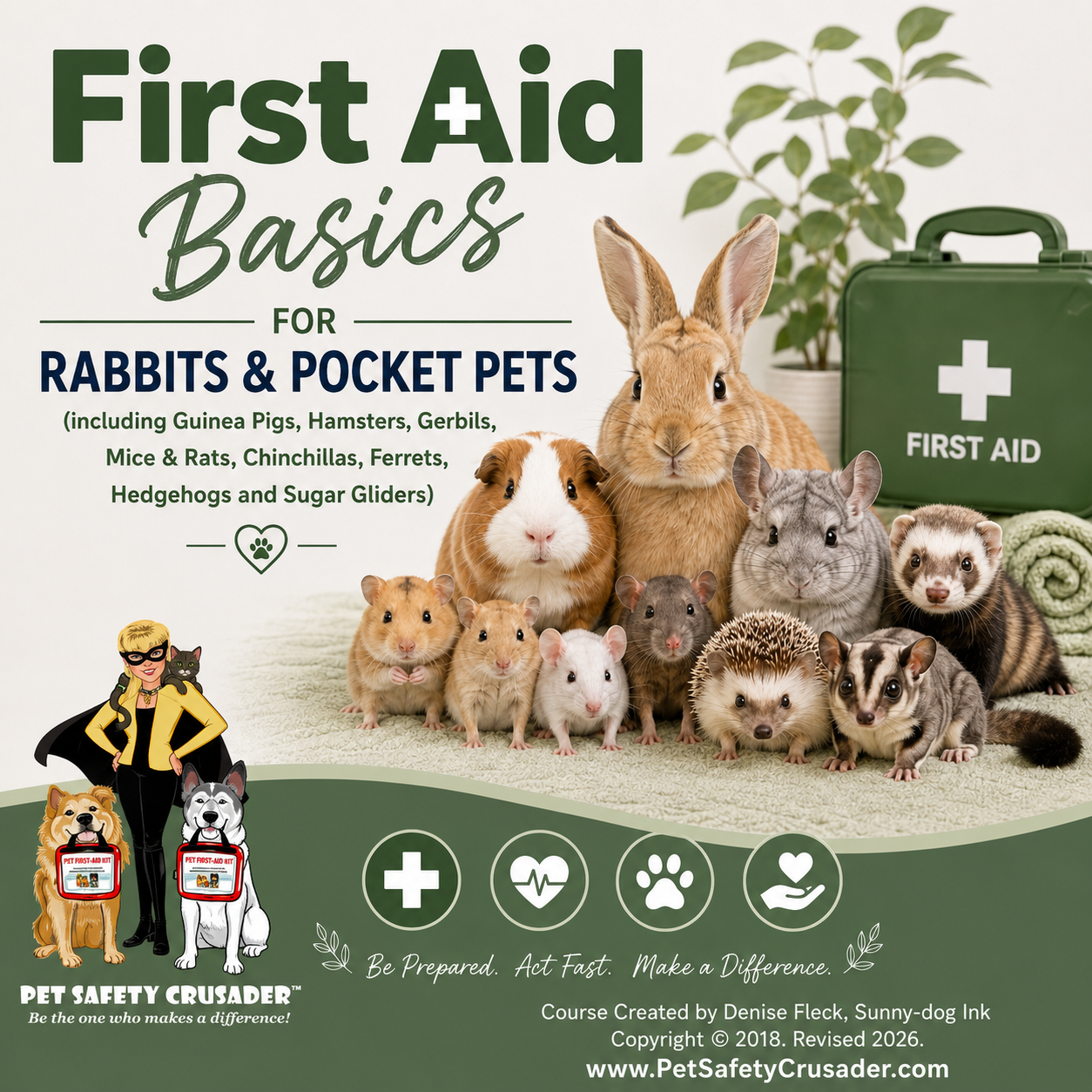
First Aid Basics & Care for Rabbits, Rodents & Exotics is a practical, easy-to-follow course designed to help pet parents, caregivers, rescue volunteers, and animal professionals better understand the unique needs of rabbits, rodents, and several popular exotic companion animals.
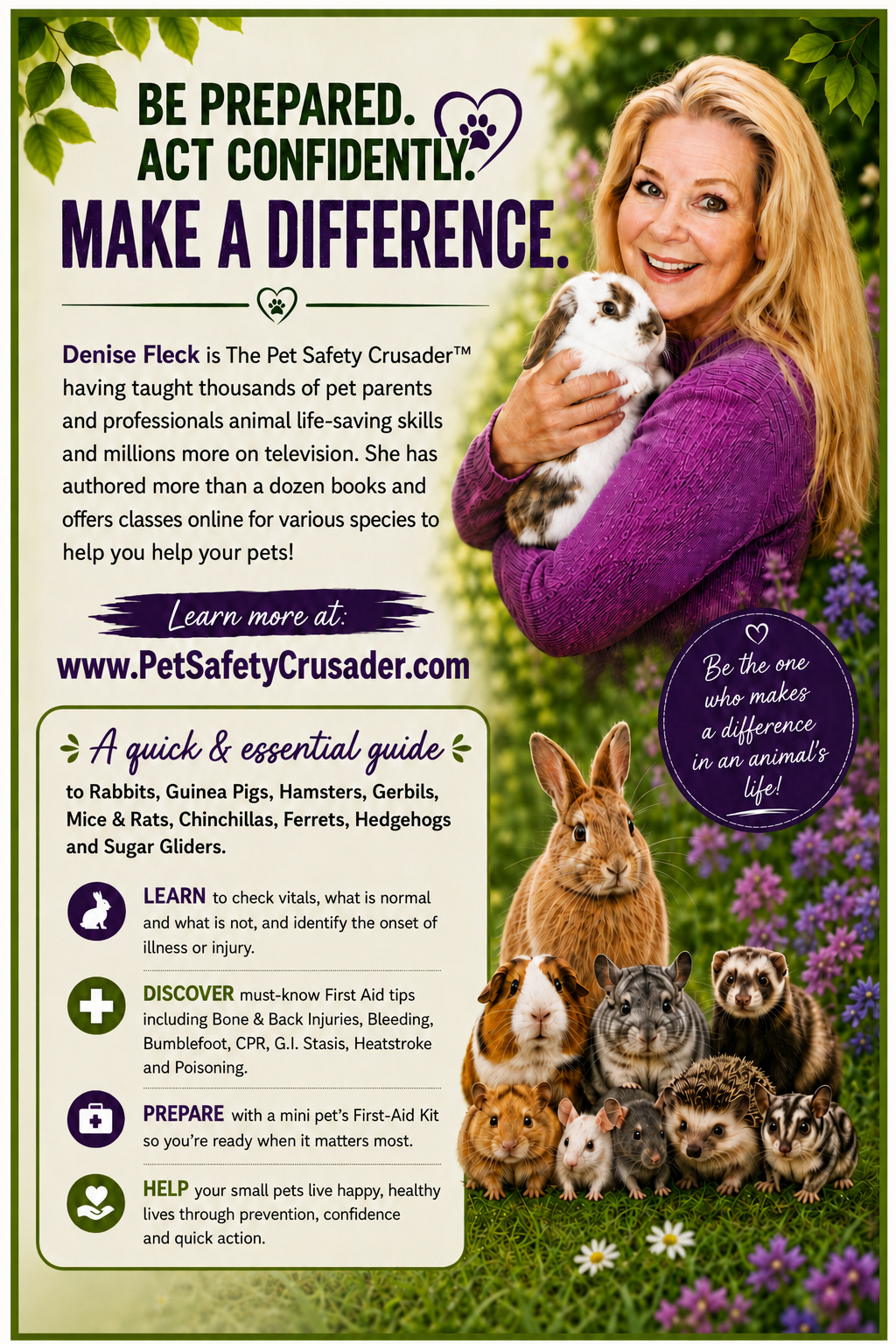
In this 4 1/2-hour recorded course, Pet Safety Crusader™ Denise Fleck guides you through essential care, normal vs. abnormal signs, common emergencies, safe handling, first aid basics, and when veterinary care is urgently needed.
You’ll learn about:
- Rabbits and lagomorph basics
- Rabbit behavior, nutrition, handling, and health
- GI stasis, heatstroke, hypothermia, poisoning, bleeding, burns, injuries, and CPCR
- Guinea pigs, hamsters, gerbils, mice, and rats
- Rodent health concerns including bloat, bumblefoot, wounds, and lumps
- Chinchillas, ferrets, hedgehogs, and sugar gliders
- Species-specific health risks and first aid considerations
- Building and maintaining a small-animal first aid kit
- How to recognize when something is “not normal” and act quickly
Small animals often hide illness until they are seriously compromised, so knowing what is normal for your pet — and recognizing subtle changes early — can make all the difference.
This course is designed to help you Be Prepared. Act Confidently. Be the one who makes a difference in an animal’s life!
 Successful completion earns 2 CEUs with Pet Sitters International towards Certified Professional Pet Sitter accreditation!
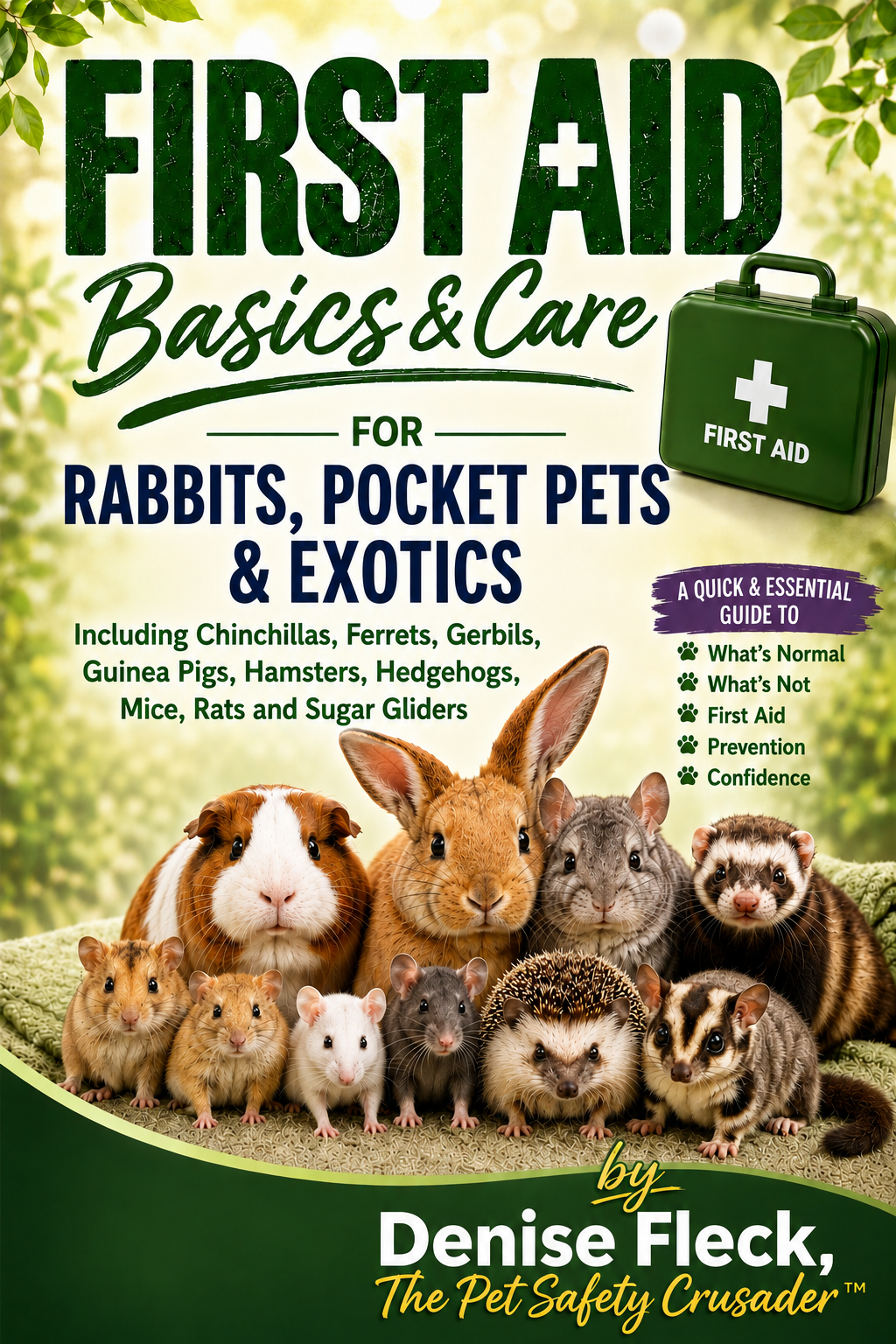
Order Textbook here: https://www.amazon.com/dp/B0HGWBCZVL
Be sure you order this book: 
Not the book with a blue & white cover which is outdated!
Important: First aid is not a substitute for veterinary care. Always seek prompt, species-specific veterinary attention whenever your pet is ill or injured.
Certificate Course: Complete the accompanying certification examination to demonstrate your understanding of the material.